
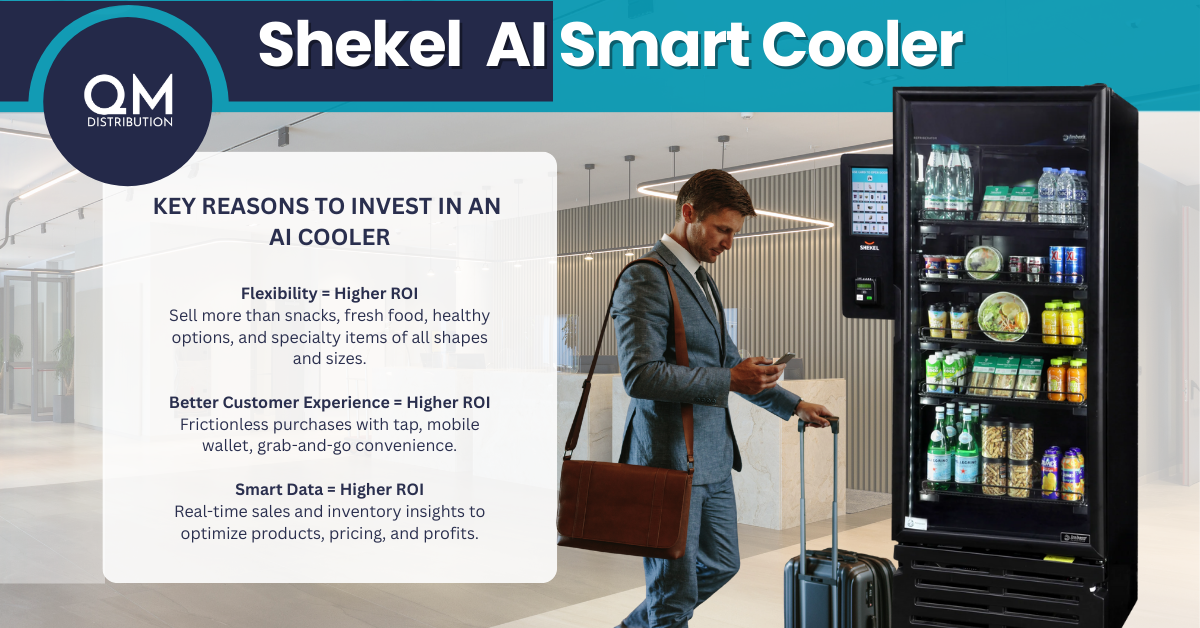
MEET THE SMART COOLER THAT'S CHANGING THE VENDING GAME
The AI Smart Cooler takes self-service retail to new heights with AI-powered powered identification, precision weighing, seamless payment options and enhanced security and remote management! Price: $8,995 -monthly subscription $80.
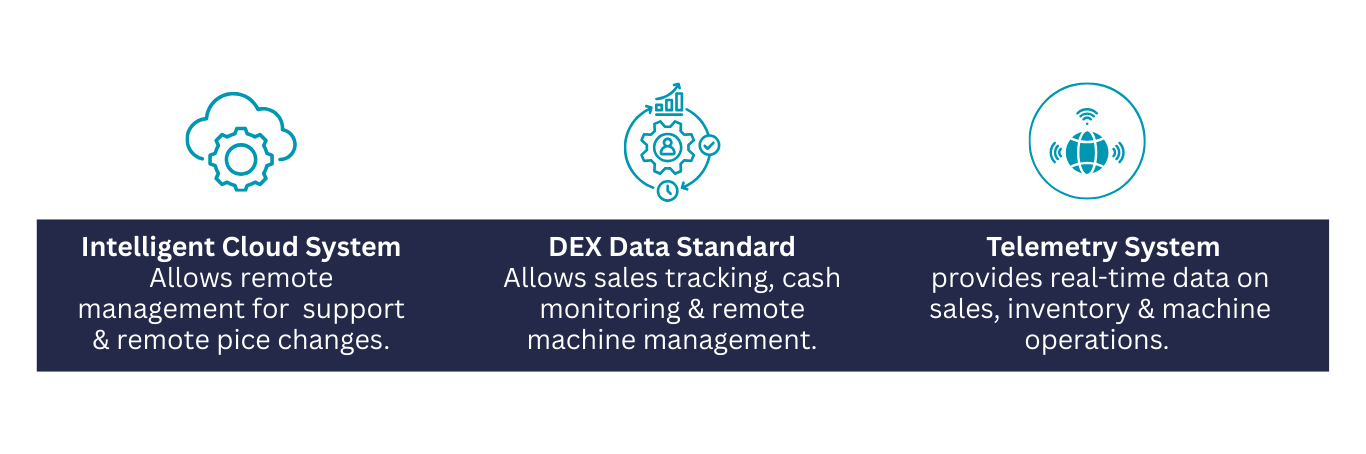
AI-Powered Product ID: AI used to identify products, weigh items & manage inventory, ensuring accurate pricing & efficiency.
Enhanced Security: Payment-activated access.
Efficiency & Profitability: Reduced labor costs, and increased profitability through optimized inventory management and streamlined transactions.
Scalability: AI Smart Coolers can be scaled to fit various needs, from small micro stores to large retail environments.
Convenient Payment Options: Supports all major payment methods.
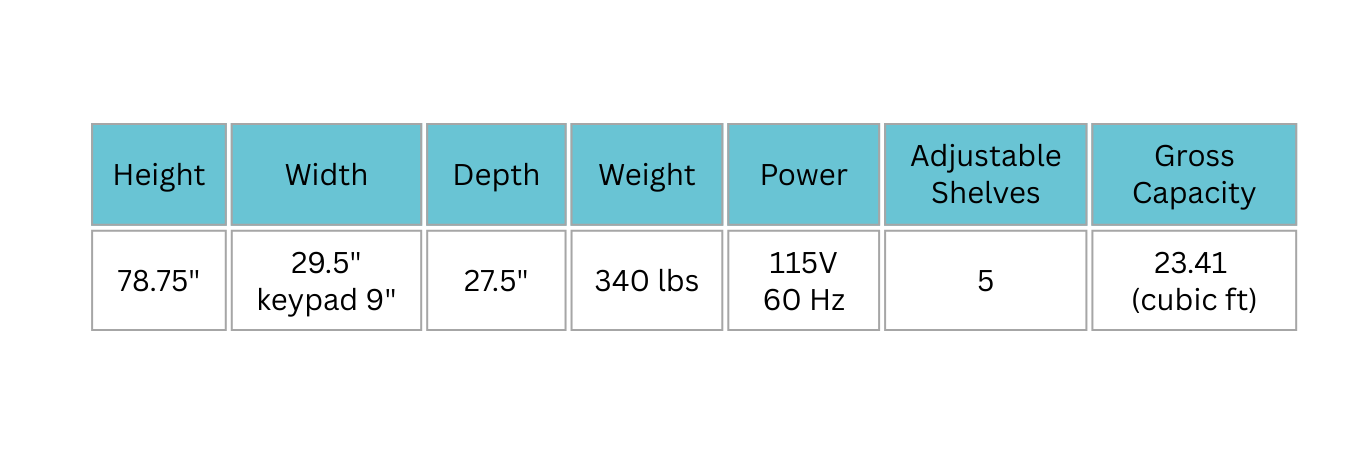
Plug & Play Installation: Effortless setup. Instantly update products and adjust shelves with ease.
What Are the Three Technology Options of AI-Smart Machines?
When launching unattended retail, the question isn't if unattended stores are the future — they are. The question is which technology actually works in the real world. Retailers have three options:
Cameras and computer vision – the "Amazon-style" approach
RFID tagging – the "track everything" approach
Weight-based AI – the quiet approach that's finally proving itself
The first two create more problems than they solve. The third is quietly transforming operations.
Why Do Camera Systems Fail in Real-World Conditions?
Installation: Multi-camera systems require precise angles and calibration. What's promised in a week takes three.
Training: Every SKU must be photographed in multiple positions. Staff spend hours rotating yogurt containers for the AI.
Environment: Condensation, glare, or glass doors degrade visibility, common challenges in refrigerated cases.
Multi-item picks: Customers grab several items at once; the AI often misreads or stalls.
Privacy: Camera recording sparks pushback. "Why am I being filmed?" "Is this tracking my face?"
Cost: Hardware plus ongoing cloud processing quickly reach five-figure investment per site. Maintenance and re-training multiply expenses over time.
What Makes RFID Look Good on Paper but Fail in Practice?
"Each product gets a tag. Readers track everything." On paper, perfect visibility.
The Reality:
Tag costs add up fast. Even at $0.10–$0.20 per passive tag, 500 daily items mean $18k–$36k per year per site, before readers, software, or labor.
Liquids absorb RF signals; metal reflects them. Bottled drinks and canned foods cause missed reads.
Suppliers rarely pre-tag products, so staff spend hours tagging items that may expire within days.
Accuracy hovers around 85–90%, with frequent ghost inventory and lost revenue. For most operators, RFID costs more than it saves.
How Does Weight-Based AI Deliver What Others Can't?
The Skeptics
"Weight? That's it?" After being burned by cameras and RFID, few get excited about smart shelves. Until they try them.
The Reality
A distributor running 30 locations reports: "We deploy a new unit in a single day. No cameras to aim. No tags to apply. Calibration takes minutes. It just works."
Products with similar weights? Modern AI handles them.
Multi-item picks? Tracked instantly.
Fresh products? Identified with >98% accuracy, even with identical packaging or condensation.
Privacy? Zero cameras, zero facial recognition, zero complaints.
Operating costs? Around $80/month for connectivity and support.
Why It Works
Deployment: Days, not weeks.
Maintenance: Simple recalibration, no specialized crews.
Reliability: Physical weight is unaffected by light or fog.
Profitability: Predictable costs and faster ROI — typically 12–18 months.
The result: 99% accuracy, 70% lower operating costs, and happier customers.
Smart cooler solutions combining weight sensors and additional data sources are gaining traction in unattended retail. — vendingmarketwatch.com